9.8.11

EAT PRAY LOVE... My 10-year affair with Italy

in a couple of weeks Italy and I will be celebrating our 10th anniversary! can't believe it's already 10 years since I moved here!
I arrived on a sunny august afternoon with plans of staying not more that 3 years, just what (I thought) it took to finish my BA and here I am, 10 years later, still happy with my choice.

Coming from a country with a single rail line which is hundreds of kilometers from where I lived and not being able to drive with gears, train travel became my favorite. Oh, the incredible landscapes I saw on my trips in Regionali trains! Poppies blooming, sunflower fields, green hills, sharp rocks, beautiful towns on hilltops, old people sitting in the stations just watching trains pass...

Then I discovered food; but not only the great pleasure of eating it, I am actually finding more and more pleasure in the process of preparing it: at home, together with G, dividing the tasks without speaking, sipping a glass of good wine, decorating, finding new tastes... and 10 years ago the only food I knew how to cook was ham sandwiches!
What has happened in these 10 years? too many things to tell! new currency, new governments, a soccer world cup, a financial crisis, 9/11, etc. I loved Italy from day one, and even if the beginning wasn't easy (new language, new culture, new people, new values), here's my top ten of the things I love about it:

1. Food - what can I say, I'm lucky to live in one of the countries with the best food in the world


2. Fashion - it just makes my day to window-shop in via Montenapoleone

3. Landscapes - some just leave you breathless 

4. the care of the body and the mind - not many cultures pay as much attention to the care of the body like Italians, and they sure know how to enjoy life
5. Rome - the most beautiful city in the world

6. Wine - Franciacorta, pinot noir vineyards in Trentino, the great (almost unknown) Verdicchio... the happiness when I recognize a scent in the wine I'm tasting...

7. Love for the animals - Italy might not be considered very civic-oriented, but the love and respect of animals that they have here makes it a country with a high level of social conscience that I admire.

8. Lyric Opera - one of the moments that gave me goosebumps: listening to "Nessun Dorma" (Turandot) at the Arena in Verona
Turandot
9. Language -
"...Amor, ch'a nullo amato amar perdona,
mi prese del costui piacer sì forte,
che, come vedi, ancor non m'abbandona..."
need I say more???

10. Living the rural life - for a city girl like me the first shot of Castelraimondo (the 4000-inhabitants-town I lived in for almost 6 years) was shocking: an empty train station on a Sunday afternoon with two old guys chatting in an incomprehensible dialect, no cars passed by in 30 minutes... But I learned to value it: the silence, the peace, waking up to the sound of birds singing, opening the window and watching the green hills that surround the town, walking to work saying hi to at least 3 people on the street, fresh vegetables, homemade wine (actually, almost everything I ate was homemade)... just priceless!

So, grazie Italia!

4.8.11

my taste of Galicia

A couple of weeks ago we were in Galicia visiting family and enjoying the fresh weather that you can only find in Galicia during the summer. And you know, while we were there, why not enjoy the delicious food of the region?

Galicia's typical dishes are mainly seafood dishes, being surrounded by the Atlantic ocean on two sides. The most famous (and delicious IMHO) are:


Percebes

  - Percebes (gooseneck barnacle): Percebes grow on rocks on the north-western Spanish coast, and they are dangerous to collect (that's why they can be a bit expensive). They look like dinosaur claws (I have never seen dinosaur claws but that's how I think they would look) and the way to cook them is to boil them in water. You eat them with your hands, to open them (using your nail) you squeeze the tube right on the base of the shell and take the flesh out. The flesh is like a snail's, but the taste is unusual, delicate but tasty as an oyster.


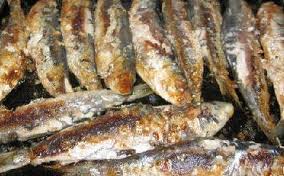
Grilled Sardines

- Sardinas (sardines): I was used to small (canned) sardines, but the sardines in the northern coasts of Spain are huge! And tasty! best way to eat them? grilled and sprinkled with coarse salt. You eat them with your hands, peeling the skin and eating the rest, even the spines. Don't forget to use bread to absorb the grease of the skin and then eat it, delicious!


Oysters
- Ostras (oysters): if you happen to pass by Vigo, make sure you visit a street called Rua de Pescaderia, a street covered with a tent (it rains a lot here) where the ostreiras (oyster ladies) outside the restaurant open the oysters and serve them with fresh Albariño wine. The street is covered , it rains a lot in Galicia so they have a permanent tent that covers the street so people can sit outside. Some say it has become a tourist trap; OK, it can be filled with tourists, but the oysters we had were huge, delicate and delicious.


Padrón pepper


- Pimientos de Padrón (peppers): OK, these are not seafood but they're worth mentioning. These are tiny green peppers from a town called Padrón, fried in olive oil and sprinkled with coarse salt. There's a saying in Galicia: "los pimientos de Padrón, unos pican y otros no" (peppers of Padrón, some are spicy others not), trust me, if you get the spicy ones you'll need liters of water!


Other delicious specialties:

Navajas (razor clams)

Mejillones (mussels)

caldo gallego (galician broth)
Since no visit to Galicia is valid without having some pulpo (octopus), here's my personal recipe:

Pulpo a feira con cachelos (Octopus a feira with potatoes)
Ingredients (serves 2)
1 octopus of 700/800 grams (fresh or frozen - see below for more details)
4 medium potatoes
2 leaves of laurel
2 garlic cloves
olive oil (the best you can get, since it goes raw)
coarse salt
paprika

If the octopus is fresh you must get it  perfectly clean and remove the ink sac (your fish vendor can do that for you). Then you place it in a plain surface and beat it with a mallet, I know, it sounds cruel but you must do it in order to make it softer. If you can't beat it then you should get a frozen one, in this case beating it is not necessary.
Boil water in a tall pan and when it boils, put the octopus inside completely, then take it out immediately, wait until the water boils again and repeat the process three times. This process is called "frighten the octopus" and it helps to keep the skin while cooking the octopus.
Once "frightened", put it back in the water together with the potatoes, a peeled garlic clove, the laurel leaves and a teaspoon of coarse salt.
The time of cooking depends upon the quality and the type of the Octopus that you are cooking. Take the potatoes from the water after 20 min. peel them and dice them.
I normally leave the octopus boil for 45 minutes per kilo (so in case you have a 2 kilo octopus it must boil at least an hor and a half). Remove the octopus from the pan with the aid of a skewer and leave it to dry for 10 minutes.
In the meantime, chop the other garlic clove and mix it in a bowl with olive oil (about 6 tablespoons). Cut the octopus into 2 or 3 centimeter pieces. Put the diced potatoes in a plate (wooden would be better), cover with the octopus pieces sprinkle with salt and paprika and top it with the olive oil/garlic mix.

Wine pairing: Albariño, Ribeira would be best since they're both from Galicia, but any other dry white wine is OK.
Note: Every home in Galicia (and in Spain) prepares octopus differently, some don't use garlic, some don't use potatoes, some cook it in a cooper pan because they say it tastes better, etc. This is my version so, enjoy!

29.7.11

Bubbles of happiness

On a beautiful (and hot!) weekend of July, G and I decided to tour wineries in Franciacorta.
First, some background:

Franciacorta is an area between Iseo Lake and Brescia, and it's about an hour and a half from Milan. Its geography of hills was shaped by glacial action, making it ideal for winemaking.
Franciacorta vineyard
 The wine:
Franciacorta is a bubbly wine, made from Chardonnay and/or Pinot Noir and/or Pinot Blanc grapes. The minimum ripening period is 25 months from harvest , of which at least 18 months of slow fermentation in the bottle, in contact with yeast. 
Chardonnay grape
 Its perlage (the bubbles, that is) is fine and persistent, color is yellow like straw  with greenish reflexes; its smell has a distinctive smell of bread crust, accompanied by delicate hints of dried fruit (almonds, hazelnuts, figs) and spices (cloves); the flavor is pleasant and fresh.
According to its sugar content, there are different types of Franciacorta:
- Pas Dosè (or Dosage Zéro, or Nature): particularly dry but delicate and sharp. It contains no sugar (btw, the add of sugar is regulated by the law and it is a part of the process of making of these types of wine, like Champagne; this process is called Classic method).
- Extra Brut: the quantity of sugar in it is up to 6 grams/liter. It is a bit dry, and it's ideal as appetizer wine
- Brut: the quantity of sugar in it is up to 15 grams/liter. Dry, ideal to be paired with food (fish, risotto, white meat), please, do not pair with desserts.
- Extra Dry: the quantity of sugar in it is up to 20 grams/liter. Dry and delicate, ideal for quiches.
- Sec, Dry:  the quantity of sugar in it is up to 35 grams/liter. Dry, ideal with strong cheeses like gorgonzola or roquefort or with non-sweet desserts.
- Demisec: the quantity of sugar in it is up to 55 grams/liter: sweet, ideal for desserts.

 Other types of Franciacorta:
- Satèn:  It's made mainly with Chardonnay grapes (and Pinot Blanc), with a pressure of 4,5 atm or lower and the quantity of sugar must not be above 15 gram/liter (like Brut). 
- Rosé: white and red wines are vinified separately when making Franciacorta. The Pinot Noir grapes are fermented in contact with the skins for the time required to obtain a rosé or red base in order to give the wine a pale pink hue. It can be made according to all types of sugar content. The presence of Pinot Noir gives it the features to be paired with cold meats, vegetables, veal and lamb, snails. 
- Millesimato (Vintage): is a type of wine that requires a particularly careful choice of "origin" of the base wine, since it imposes the highest class, quality and taste. It is made from grapes harvested in both climatic conditions of the same, very favorable, harvest (at least 85%). It is produced with the aging for at least 37 months after the harvest, of which at least 30 of the second slow fermentation in the bottle with the yeast. The vintage has a personality and sense of taste which vary every year, because they reflect more than any other the climatic conditions and expressions of a specific quality of the grape harvest. It is perfect with any meal, with intense flavor and a light amber hue. Vintage on the label shall be marked as the year of harvest (the last two digits).

OK, now, back to where we were... 

So, on a Saturday morning we took the car, the "Bible" (the Italian Sommelier Association guide that contains the descriptions of the wines) and left for our first stop, Le Marchesine in Passirano, a family-run winery that follows the techniques of Champagne. 
Vineyard at Le Marchesine

We had our first taste of their Franciacorta at Vinitaly (the famous wine fair of Verona) in April, we had a glass of their award-winning Secolo Novo (Brut, 2005, aged 36 months) and fell in love with it. We had a guided tour of the cellar with the youngest heir who showed us the warehouse where they keep the bottles, the machinery (imported from France) that they use to turn the bottles and the process of bottling; he also explained their method of producing the wine, the types of wine, part from Franciacorta, that they produce, etc. We didn't taste the wine this time but left the place with some boxes...
wine cellar
After Le Marchesine we drove to Adro to Ricci Curbastro, a bigger family-owned winery, where we had a tour of their agriculture and wine museum by its owner, Gualberto Ricci Curbastro. It was very interesting to see the tools and machinery used in the old days in the countryside and the first wine machines. After that, his son Riccardo brought us to the cellar and showed us around after a very pleasant and interesting talk about his techniques, his research on yeasts and the latest on the EU laws regarding designations of origin (aoc's). Since 2008, the winery produces electricity through solar panels. Nowadays it is almost independent in terms of energy thanks to solar panels that can produce up to 20 kWh. We had our first glasses of Ricci Curbastro wines there: a Brut, a Satèn and a Rosé; my personal winner was the Rosé Brut: made of Pinot Noir (80%) and Chardonnay (20%), after a second fermentation, the bottles remain in the pile for at least two years. After disgorgement (that's the release of the yeast from the bottle) and the dosage (the addition of a little extra wine and liqueur d'expedition - the amount of sugar), the wine stays in the cellar for a few months. The total period of maturation is of at least 36 months. It's color is a pink salmon with persistent bubbles, fine and brilliant. The scent is of black cherries, wild berries and mountain herbs, scents of rose. Taste is fresh, fruity and fragrant, in one word: delicious!

After Ricci Curbastro we had a lunch break with homemade sandwiches and relax in our hotel; Iseo Lago, by Iseo Lake (obviously). It is a lovely place, wish we had spent more time there but duty called! (wine called, actually) Among all the facilities it has 2 swimming pools, a spa, 2 restaurants and it's next to a camping/sports complex that is directly in the lake. We had breakfast there the following morning and it was good (cold meats, sweets, cheeses, juices, etc.).
Iseo lake
After some relax we drove to Cologne to La Boscaiola, another relatively small family-run winery, this one is special because it is run by 2 women. We met Giuliana (one of them, very kind) who explained the story of the winery, founded by her father Nelson (doctor, former Alpine officer, Russian war veteran and writer) in their 1600's farmhouse. After the tour of the cellar we tasted some of their (very good) wines and left with a couple of boxes and the advise of an excellent restaurant for dinner.
sign at Giuliana's desk
We had dinner, following Giuliana's advise, at Trattoria Cacciatore in Sulzano (by the lake) where we had a delicious appetizer with fish from the lake, I had their specialty: tagliolini all'oca (handmade pasta with goose ragout) while G had the perch. The whole was paired to a delicious La Boscaiola's Brut. If you're ever in the area, don't miss it! (and book ahead, they're always full)
view from the restaurant
The following day, after a good breakfast in the hotel, we left for the wine shop in Erbusco, where we got a bottle of Uberti (don't remember which one but it was expensive). After that we went to Franciacorta Outlets to finish the weekend shopping!

Hope I didn't bore you too much!


22.7.11

Yellow Skagen

Skagen is a place that not many people know about but in my opinion a must see in Scandinavia. It is located in the tip of the northernmost part of Jutland, the Danish peninsula. On its north beach people can experience the beautiful landscape of waves from the Baltic Sea and from the North Sea clashing together and therefore changing the orientation of the tip (sometimes it's on the right, sometimes on the left).
Tourists in Skagen's tip
 Apart form being a touristic spot, Skagen is a fishermen town, very characteristic and live. It's beautiful houses are mostly colored yellow, in fact, in Denmark when one goes to get paint, among the palette of colors he'll find yellow skagen.
Yellow Skagen
If you talk about Skagen, you can't ignore the Skagen Painters. They were a group of artists who moved from the city to this quiet, beautiful area and started an artist colony in the late 19th century. Some of these artists were: Peder Severin and Marie Krøyer, Michael and Anna Ancher and Christian Krohg. They started a small museum in the dining room of the Brøndum’s Hotel in 1908 (they used to meet there, the hotel still exists). In 1919, the hotel donated its old garden to Skagens Museum, where it still stands after various renovations.
Me in Skagens Museum garden
 Today Skagens Museum has more than 1800 works of art at its disposal. Since I fell in love with the paintings of these artists, here are some of my favorites, the pictures were taken in 2008 during the SALON style exhibition:
Salon style exibition (photo from Skagens Museum website)

Summer evening at Skagen - P.S.Krøyer
Skagen's paintings
my favorite: Summer evening on Skagen's Southern Beach. P.S. Krøyer

Midsummer's Eve bonfire on Skagen's beach. - P.S.Krøyer

 The beauty of the paintings resides in the colors, especially the color of the sky which at this latitude has very special tones of blue, and the reproduction of everyday life scenes, like the wives of the two painters walking at the beach or the typical celebration of Sankt Hans Eve with the bonfire. 

If you are in the area, you might want to wander around North Jutland, not far from Skagen you can find Råbjerg Mile, the largest moving dune of Northern Europe, that makes you think for a moment that you are in the desert and not in Scandinavia.
Råbjerg Mile
 You mught want to stop by the Tilsandede Kirke (the Sand Church), a church located 4 km. south of Skagen, it is tall, white building at the top of a sand hill. But what is visible is only its bell tower. The rest of the church was buried by migrating sand dunes (like the ones in Råbjerg Mile) around the 1400s!
Den Tilsandede Kirke (photo from Wikipedia)
 Last time I was there we drove down to spend the night in Sæby, a small fishermen town south of Skagen 50 km. Henrik Ibsen (among other writers) lived here and here he found inspiration for one of his plays, maybe that's why they call it the "Poets Village".
us in Sæby
 The landscape is not so different from the Painters Village, Skagen: blue sky, yellow houses, people on bikes, etc. But the best place of Sæby , for us, is an excellent fish restaurant: Frank's Restaurant by the harbor. Their buffet is great! fresh fish, cooked different ways, soups, salads, etc. and the price is very good considering you're in Denmark and you're having fresh fish (lunch buffet 139 dkk, dinner buffet 199 dkk).


us after dinner at Frank's
Sæby evening

We stayed and Aahøj Hotel, a cozy bed and breakfast by the river, clean, reasonably priced and very quiet.

We loved our time in North Jutland! can't wait to go back!
Our version of "Summer evening on Skagen's Southern Beach"